

A Jar in My Own Handwriting, and a Tin of Eight Herbs
A retired school-kitchen cook counts her empty trips to the pantry. The tin her old second cook brought, its eight herbs, the honest research on each one and the return terms, read like a recipe card.
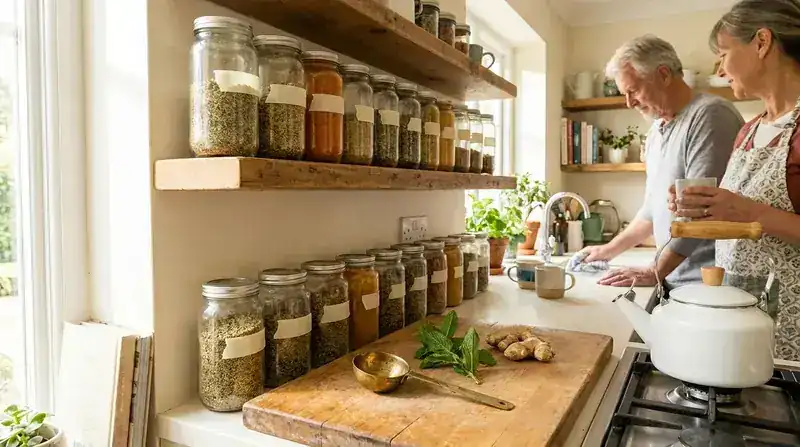 Pantry Shelf · Eight Herbs
On a Tuesday last September, I walked into my own pantry, took a jar off the second shelf and stood there with it in my hand.

The label was a strip of masking tape in my own handwriting, the same block capitals I used on thirty years of school-kitchen bins.
It said GINGER, and I knew it said GINGER.
What I didn't know was why I was holding it. I'd walked in there for something, and the something had walked right back out of my head and down the hall.
I stood in the doorway for most of a minute, with the light on and the jar open.
Then I put the ginger back, turned off the light and went to sit at the kitchen table.
It came back eleven minutes later, while I was looking at the stove. I'd gone in for the bay leaves, for the soup that was already simmering in front of me.
I'm sixty-four.
For thirty years I ran the kitchen at an elementary school in our river town, which means I fed four hundred children a day and never once wrote down the recipe for the chili.
So that minute in the pantry did not feel small to me.
A woman who kept four hundred lunches in her head had just lost one bay leaf, and she lost it in her own pantry door.
This is a column about a pantry shelf and the jars that live on it.
It's also about a dented tin, a strip of masking tape in somebody else's handwriting, and eight herbs from an Oregon herb house.
If you've ever walked into a room and stood there waiting for the reason, you'll know most of this already.
You just haven't seen a school cook write it down on the whiteboard on her refrigerator.
Thirty Years of Four Hundred Lunches a Day
A school kitchen is a small factory that has to be finished by eleven-fifteen. There's no such thing as late, because the children arrive whether the rolls are ready or not.
I started there in 1993 as the dish girl, at thirty-one, with two kids of my own in the building.
I retired in 2023 as the head cook, with a bad shoulder and a drawer full of thank-you cards in crayon.
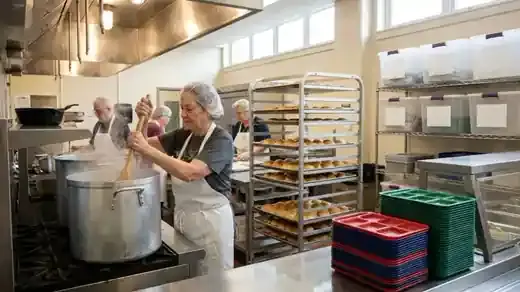
The work is easy to describe and hard to do on time.
You read the menu, pull the stock, scale the recipe for the head count and start the ovens before the buses arrive.
Chili for four hundred is twenty-two pounds of ground beef, nine number-ten cans of beans and a fistful of cumin you measure by feel.
Cornbread for four hundred is four sheet pans and a prayer.
On a normal day I had about sixty things in my head at once.
The head count, the allergy list taped by the walk-in, the boy who needed his milk in a cup, the substitute who didn't know where the ladles lived.
I knew every bin on every shelf by its place, not by its label.
Flour third bin from the left, oats above it, the good vanilla behind the baking powder where the principal couldn't borrow it.
And I knew the names, which is the part I miss the most. After a few weeks, every child on that line was a name and a lunch:
Tyler no tomatoes, Rosa extra peaches, Marcus who'd eat anything if you called him chef.
You don't learn four hundred names from a list. You learn them the way you learn your own family's faces, by seeing them every day until you can't not know them.
That's why the pantry door bothered me so much.
It wasn't a fact I'd misplaced; it was my own kitchen, and for a minute it didn't tell me what I was doing in it.
Counting the Empty Trips to the Pantry
Once the bay leaves happened, I did what a head cook does when the walk-in looks short. I took inventory.
On my refrigerator there's a small whiteboard where I used to write the grocery list.
That evening I drew a line down the middle of it and wrote two words at the top of the right side: EMPTY TRIPS.
An empty trip, in my kitchen, is a walk to the pantry that comes back with nothing.
You go in for something, you stand there, and you come out with your hands empty and your face warm.
For two weeks I made a tally mark for every one.
I didn't cheat, and I didn't skip the embarrassing ones, because a cook who fudges her inventory ends up serving peanut butter on Friday.
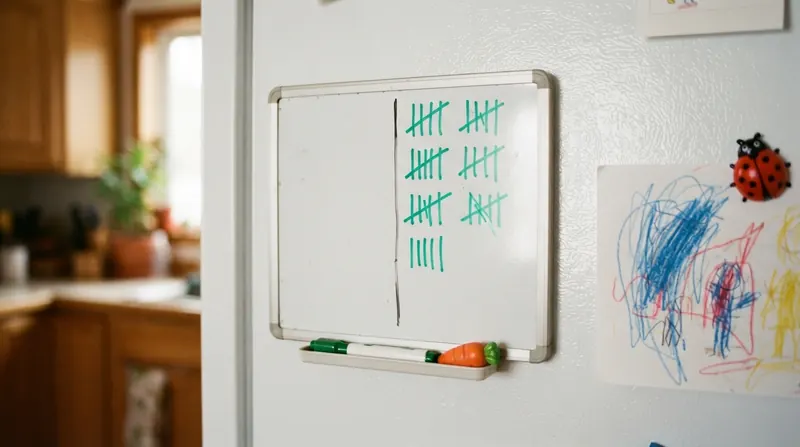
The first week came to eleven. Eleven times I walked into a room I'd stocked myself and came out without what I went in for.
Some of them came back on the walk to the stove. The bay leaves, the cornstarch, the little jar of nutmeg I wanted for Lenny's eggnog.
Some of them never came back at all, and those were the ones I minded. There's a particular feeling to standing in front of your own shelves with nothing to ask them.
The second week came to nine. Two fewer, which I could have called progress if I'd been a different kind of cook.
But nine is still more than one a day. And once I started counting the pantry, I started noticing everything else I'd been filing under "busy."
The Grocery List on the Counter and the Name at the Store
The grocery list, for one. Three Saturdays in a row I wrote it carefully at the kitchen table and left it on the counter by the toaster.
I'd find it when I came home, folded in half, in my own handwriting, listing the things I had just failed to buy.
Lenny started taking a photo of it with his phone without saying anything, which was kind and which I hated.
The keys were the usual story.
One morning they were in the bread box, and one evening they were in the refrigerator door next to the mustard, and I'd put them in both places myself.
Recipes went next, and that one scared me more than the keys.
I've made the same pumpkin bread since 1988, and one afternoon I stood with the flour bin open and couldn't remember if it was two cups or three.
It was two and a half.
I knew that by the time the oven was hot, but I had to go and get the card, and I've never had to go and get the card.
And then there was the Saturday at the grocery store.
I was standing in the produce section with a bag of onions when a man said, "Mrs V, you still making that chili?"
It was our school custodian of twenty-two years, the man who fixed my walk-in freezer at five in the morning more times than I can count.
I knew his face, his laugh, the way he whistled through his teeth.
I could not find his name. I said, "Well, look who it is!"
and talked about the weather and the price of onions for four minutes until he said goodbye.
It came to me in the parking lot, with the onions on the seat beside me: Ray Delgado, the children's "Mister D" and the kitchen's Del.
I sat in the car and said it out loud twice.
Then I drove home and didn't tell anybody, which is how I knew it mattered.
I started finding reasons to skip things after that. Not big things, just small ones: the church supper where everybody knows your name and expects you to know theirs back.
I told myself it was the shoulder, because the shoulder was respectable.
The truth was that a room full of familiar faces had started to feel like a test I hadn't studied for.
Puzzles, Sticky Notes and a Lot of Coffee
I'm a practical woman. Before I ever heard of a tin with eight herbs in it, I tried every kitchen-table answer there is.
I bought the crossword book at the drugstore, the big one with the cardinal on the cover.
I did a puzzle every morning with my coffee and got better at crosswords, which is a skill I now have.
I put sticky notes on everything. The cupboard doors, the bathroom mirror, the dashboard of the car, until the kitchen looked like a bulletin board at the end of the school year.
The trouble with sticky notes is that you stop seeing them. After a week, the yellow squares on the cupboard were as invisible to me as the wallpaper.
I downloaded a brain-game app that my daughter recommended, the one with the cartoon owl.
I matched shapes for about twelve days, then the owl started sending me disappointed notifications and I deleted it.
And I drank more coffee, because in a school kitchen coffee is what you do when you're behind.
By October I was on four cups by noon and my hands shook when I measured the vanilla.
None of it was foolish, and none of it was the answer. It was all aimed at the kitchen table, and the kitchen table wasn't where I'd lost anything.
What I had lost, if I'm honest, was the noise of the kitchen.
Thirty years of four hundred names, sixty things in my head and a clock on the wall, and then one day the room went quiet.
Pilar, Her Herb Bundles and a Dented Tin
Pilar Ochoa was my second cook for nineteen years. She came to the school kitchen at forty with a toddler on her hip and a grandmother's way with a pot of beans.
She's sixty now, and every Saturday from May to November she sells herb bundles at the farmers' market by the river.
Mint, sage, rosemary, dill, tied with kitchen string the way we used to tie the bouquet garni for the soup.
I hadn't been to the market since August. That was one of the small things I'd quietly dropped, because the market is a place where people call you by name.
Pilar noticed, because Pilar notices everything. In nineteen years she never once let a tray go out with the wrong rolls on it.
On a Monday in October she knocked on my kitchen door at ten in the morning, which is not a time anybody knocks unless they've made up their mind about something.
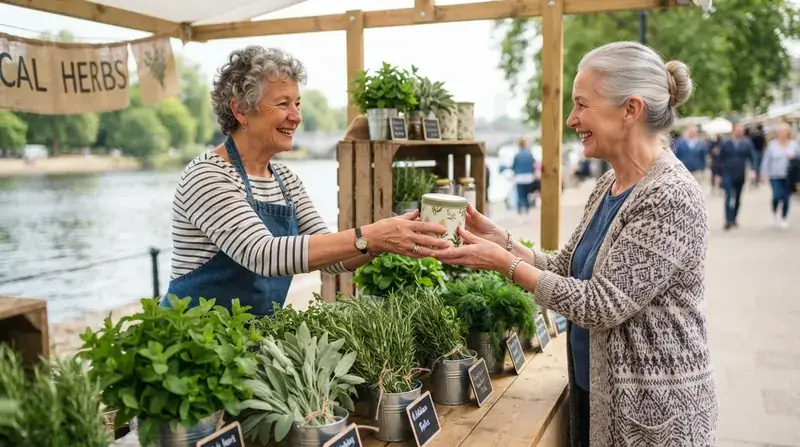
She had a canvas bag with two bundles of mint and a round tin with a dent in the lid.
She put the tin on my counter, right under the whiteboard with the tally marks, and read the whiteboard before she said hello.
"Eleven, then nine," she said. "Bernie, you're counting something."
So I told her, at my own kitchen table, the whole thing:
the bay leaves, the list on the counter, Ray Delgado in the produce section and the church supper I'd skipped twice.
She listened the way she used to listen to a delivery driver who swore the order was complete. Then she pushed the tin across the table.
I read that strip of tape three times. Then I did the head cook's thing:
I put the tin on the second shelf with the others and decided I'd read every word on it before I put the kettle on.
Did you read the tin, or did it go behind the baking powder?
7:12Read it twice. It's on the second shelf until I've read the company's page too.
7:20Good, that's what you made me do with every delivery for nineteen years. Market's Saturday at eight.
7:21I'll be there. Save me the stool behind the mint.
7:24Why a Line Cook Brings You a Tin Instead of Advice
That Saturday I went to the market, partly because Pilar had earned it and partly because I wanted to cross-examine her.
I sat on the stool behind the mint and asked her straight out why a tin. Why not a crossword book, or a clinician's name, or a pep talk.
"Because you trust a label more than you trust me," she said, handing a customer a bundle of sage. "You always did;
I'd tell you the beans were done and you'd go and taste them anyway."
That's true. Thirty years of school kitchens teaches you that what's printed on the box is what the inspector reads, and what the inspector reads is what matters.
"Also," she said, "you were a cook before you were anything else. You won't sit still for a lecture, but you'll sit still for a kettle."
She told me she'd been drinking a cup of the same tea most afternoons since the spring.
Not because anybody promised her anything, but because she liked the mint and liked having a reason to sit down at three o'clock.
"I'm not telling you it changes anything," she said. "I'm telling you it's eight herbs you already know, from people who print their phone number, and you've stopped sitting down."
Then she went back to selling mint, and I sat on the stool behind her for two hours. Four people called me by name, and I got three of them.
I wrote that down on the back of a market receipt. Three out of four is not perfect, but it's a lot better than "well, look who it is."
Reading the Tin the Way I Read a Delivery Slip
Here's the tin, line by line, the way I checked every delivery for thirty years.
I'm going to read it out loud the same way, because the label is the only part of this I can vouch for completely.
Top of the tin: "Organic." Then the name, in big block letters: "Memory Zest Tea."
I want to be careful with that middle word.
"Memory" is the name the company gave the blend, the way a diner calls its plate "The Lumberjack"; it's a name, not a promise, and I'm not going to read it as one.
Under the name: "Herbal Supplement." That tells you how the company classifies it.
It's sold as a supplement, not as a medicine, and nobody at a government agency has reviewed a claim about what it does.
On the front panel:
a little USDA Organic seal, a box that says "Loose Leaf Tea," a kosher mark, and the words "Caffeine Free" on either side of a drawing of a ginkgo leaf and a red clover blossom.
At the bottom: "Net Wt 1.9 oz (53.9 g)." That's a little under two ounces of dried herbs, which in a tin that size is a good, honest fill;
it rattles a bit, but it isn't half air.
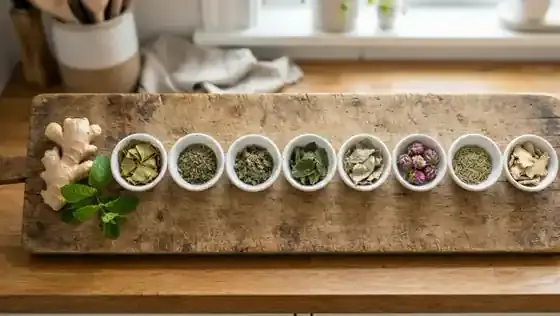
The ingredient list, from the seller's page: organic ginkgo leaf, organic brahmi, organic peppermint, organic spearmint, organic lemon balm, organic red clover herb, organic rosemary leaf and organic ginger root.
Eight herbs on one line, all organic, nothing added for color, sweetness or bulk.
For a woman who has read the backs of a thousand cans of gravy base, that line is a pleasure.
The brewing instructions:
fill one tablespoon of tea in a cloth tea bag or mesh basket, pour eight ounces of boiling water over it, and steep three to five minutes or until it's as strong as you like.
And the caution, which is the most important sentence on the page.
The seller says that anyone with a clotting condition should use this tea only under the supervision of a qualified healthcare practitioner.
In kitchen English, that means if your blood doesn't clot the way it should, or you take anything to thin it, you talk to your own clinician before the first cup.
I'll come back to that sentence, because it deserves more than one paragraph.
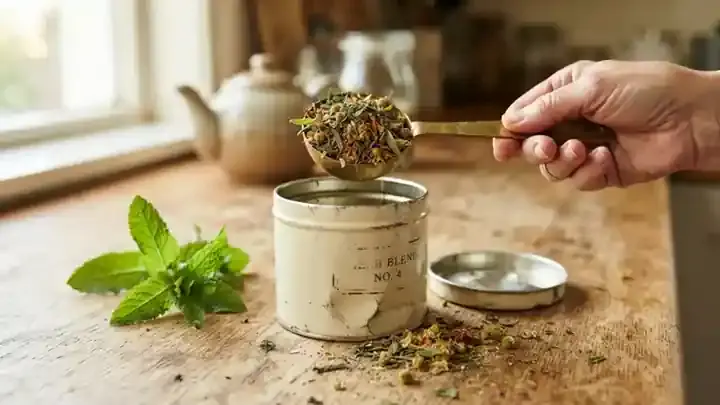
What the tin does not say is just as useful.
It doesn't say how much of each herb is in the blend, and it doesn't say how many cups the tin makes.
A cook notices that. A recipe without amounts isn't a recipe; it's a shopping list.
So this blend tells you what's in the pot, but not the proportions, and I'm not going to guess them for you.
Eight Herbs, Read One at a Time Like a Recipe Card
That night I sat at the kitchen table with a mug of hot water and lemon, my reading glasses and a legal pad. I made one rule before I started:
I'd read the studies on each herb, not the stories about them.
My daughter Megan works at a hospital in Portland, and she sent me the plain-language government pages and the actual trials.
She also texted me, "Mom, the amounts matter, so look at the amounts."
She was right, and it's the most useful thing anybody told me all year.
A study that used a concentrated extract tells you about that extract, not about a tablespoon of dried leaves in a mug.
Start with the first herb on the list, the ginkgo leaf, and the plainest page in the whole file.
The National Center for Complementary and Integrative Health keeps a short page on ginkgo, written for the public.
[1]
There is no conclusive evidence that ginkgo is helpful for any health condition.
Ginkgo may increase the risk of bleeding in people taking anticoagulants, and fresh ginkgo seeds are toxic.
— National Center for Complementary and Integrative Health, Plain-language summary of the research on ginkgo[1]
I respect that page the way I respect a health inspector who tells you the walk-in is fine.
A government office that prints "no conclusive evidence" about one of the most famous herbs in the world is an office I'll believe on other things.
Next, the biggest ginkgo trial there is. It's called the Ginkgo Evaluation of Memory study, and every honest article on this leaf ought to mention it first.
It enrolled 3,069 adults aged 72 to 96 living in their own homes and followed them for a median of about six years.
Half took 120 milligrams of a standardized ginkgo extract twice a day, and half took a placebo.
[2]
At the end, the ginkgo group did no better than the placebo group on tests of memory, attention, language, visual skills or planning.
Six years, three thousand people, and the two groups ended up in the same place.
[2]
Then a much smaller ginkgo study, in people closer to my age.
Ninety-three healthy adults between 55 and 79 took 120 milligrams a day of a ginkgo extract or a placebo for twelve weeks.
[3]
The ginkgo group did somewhat better on one kind of task, learning pairs of things and recalling them later.
On every other measure of attention, planning and thinking, there was no meaningful difference.
[3]
One result out of many is a thin thread.
It's a reason to keep reading, not a reason to buy anything.
The second herb is the one that made me put my pencil down: brahmi. The seller's page lists "organic brahmi" and stops there, with no Latin name behind it.
That matters more than it sounds.
In some parts of India the word "brahmi" is used for a creeping water plant called bacopa, and in other parts it's used for gotu kola, which is a different plant altogether.
So I can't tell you which plant is in this tin, and the listing doesn't say.
If you want to know, the phone number is on the page, and that's the first question I'd ask.
If it is bacopa, there's real research on it, in the right age group.
In 54 healthy adults aged 65 and older, 300 milligrams a day of a standardized extract for twelve weeks was associated with better delayed word recall than placebo.
[5]
In 98 healthy adults over 55, the same daily amount for twelve weeks was associated with better verbal learning and delayed recall, while other measures didn't differ, and the extract caused more stomach upset. [4]
A review that pooled nine of those trials found faster scores on two attention-speed tests, by a matter of milliseconds, and asked for a large, well-designed trial. [7]
Every one of those studies used 300 milligrams a day of a measured extract, for at least three months.
A pinch of a dried plant somewhere in a tablespoon of eight herbs is not that, and I won't pretend it is.
Now the herb that made me laugh out loud at my own kitchen table: rosemary.
I've used rosemary on roast chicken for forty years, and it turns out somebody tested it in a dose a cook would recognize.
In a small trial, 28 adults with an average age of 75 were given a single dose of dried rosemary leaf on different mornings.
The 750-milligram dose, close to what you'd use in cooking, was associated with faster speed on memory tasks than the placebo.
[6]
And here's the part every cook should read twice. A much larger dose, 6,000 milligrams, had the opposite effect, and some measures got worse.
[6]
More is not better, as every cook who ever over-salted a soup already knows. A little rosemary helped on the test; a lot of rosemary hurt.
It was one small study of single doses on single mornings, and I'm not going to build a house on it.
But it's the only study in the file that used an amount you could put in a pot, and I liked it for that.
Then the two mints. Spearmint has a real trial behind it:
90 adults with an average age of 59, who noticed changes in their own memory, took 900 milligrams a day of a spearmint extract or a placebo for 90 days.
[8]
The spearmint group had better scores on two kinds of working-memory tests.
But that was a concentrated, proprietary extract at 900 milligrams a day, and a lower 600-milligram dose didn't stand out from the placebo.
[8]
So the trial is about a special extract made for the trial, not about the spearmint leaves in a cup of tea.
Peppermint, the other mint in the tin, I found no memory trial for at all, and I'm not going to make one up.
Lemon balm is the gentlest herb on the list, and its study is the most honest one in the file.
Twenty healthy young adults took single doses of a lemon balm extract on different days.
[9]
At one dose, their accuracy on attention tasks was better. At some doses and times, their memory scores were actually lower, and at the highest dose they felt less alert.
[9]
That's a study pointing in two directions at once, in young people, with an extract. I read it as a reason for modesty, and so should you.
Red clover and ginger have no memory trials in my file, and I won't invent any.
Ginger is in there, as far as I can taste, for warmth, and red clover for an old-fashioned meadow flavor.
So here's the whole file, written the way I'd write up a new recipe for the district office.
A blend of eight familiar herbs, two of them with some research in concentrated form, one with a kitchen-sized study, and no study on this particular tin.
That's not a wonder. It's not a nothing either;
it's an honest cup of eight plants with a plain label, from a company that prints its phone number and doesn't pretend to be medicine.
And for a woman who needed a reason to sit down every afternoon at three, an honest cup turned out to be enough to start with.
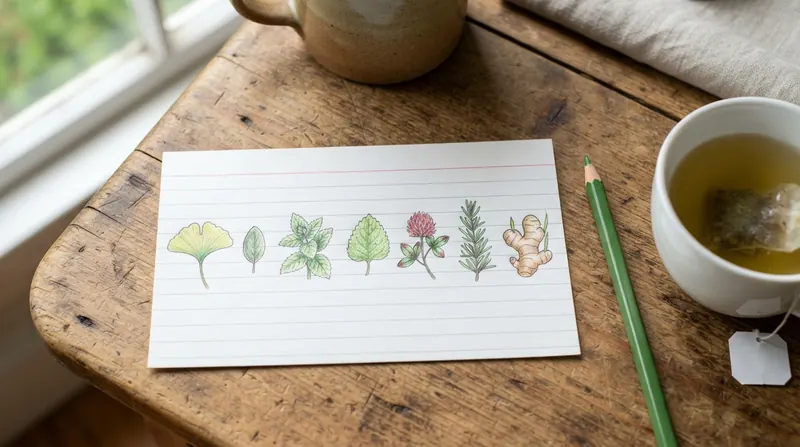
Eight Herbs Like Eight Helpers on a Kitchen Line
A kitchen line is a brigade: everybody has a station, and nobody's the hero. That's how I came to think about the eight herbs in this tin, once I'd read the file.
Ginkgo leaf is the old head cook, first on the list and the most famous.
It's been around longer than anybody else in the room, and it has the longest record of being tested and not living up to its reputation.
Brahmi is the new hire whose name tag nobody can read.
It might be the hard worker with the good references, or it might be its cousin from the other district, and the label doesn't say.
Peppermint and spearmint are the twins at the salad station. They do the work you notice first, the cool, green smell when the kettle hits the leaves.
Lemon balm is the quiet one who wipes down the counters, soft and lemony, never the loudest thing in the cup.
Red clover is the farm kid, a little grassy and sweet, the taste of a hayfield in June.
Rosemary is my old friend from the roast-chicken days, the piney note you catch on the second sip.
And ginger is at the stove, last on the list but the one who warms the whole kitchen up.
No one helper carries the line, and I want to be clear about that.
A blend like this is a cup of tea with eight familiar plants in it, not a dose of any one of them.
One Tablespoon, Eight Ounces and Four Minutes on the Timer
So I took the tin down from the second shelf.
Here's the routine, written the way I'd write a procedure for a new hire, because the routine turned out to be most of the point.
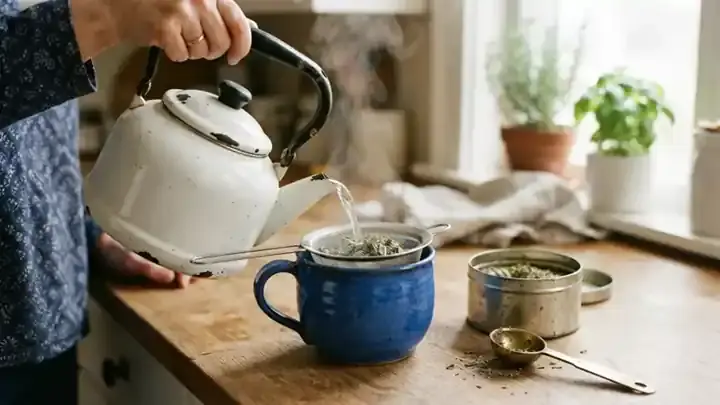
Step one: the kettle. I use a white enamel kettle with a chipped handle that my mother gave me in 1985, filled to the line that makes two cups.
Step two: the tablespoon. The label says one tablespoon in a cloth bag or mesh basket.
I use a brass measuring spoon from the school kitchen that the district was throwing away, and a mesh basket that sits inside my mug.
Step three: eight ounces of boiling water, poured over the leaves the moment the kettle whistles.
Eight ounces is one standard measuring cup, which is a little less than my big blue mug holds.
Step four: the timer. The label says three to five minutes; I set the oven timer for four, because I'm a school cook and I like a number in the middle.
Step five: the chair. This is the step that isn't on the tin.
While the timer runs, I sit at the kitchen table with the whiteboard in front of me, and I don't get up until the cup is gone.
That's the whole procedure. No blender, no measuring scoop of powder, nothing to swallow whole with a glass of water; just a kettle, a tablespoon and a chair.
The taste, since everybody asks. The seller describes it as "a minty aroma with a flavorful herbal kick," and for once a product description is accurate.
The mint hits first, cool and clean.
Then there's something green and a little bitter underneath, which I'd guess is the ginkgo leaf, and a warm finish from the ginger on the back of the tongue.
It tastes like the kitchen garden in August, if you'll forgive a cook for writing like a cook.
Lenny tried it once and said it tasted like a mint julep that went to church, which I've decided to take as a compliment.
If you like it sweeter, a small spoon of honey is fine; it's a cup of tea, not a test.
I drink it plain at three o'clock and sometimes add a slice of fresh ginger when the weather turns.
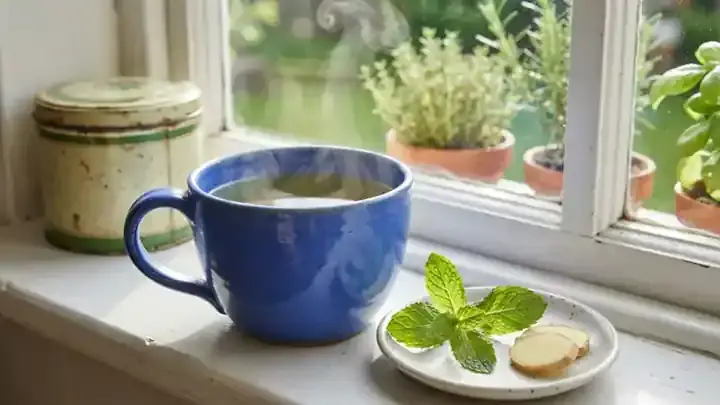
And it's caffeine free, which the tin prints on both sides of the front panel.
For a woman who'd worked herself up to four cups of coffee by noon, that mattered more than I expected.
Not Coffee, Not Medicine and Not for Everyone
Before I go one step further, let me say what this tin is not, because the label is careful about it and so am I.
It's not a medicine.
The tin calls it an herbal supplement, and the federal statement that applies to supplements says that its claims have not been evaluated by the Food and Drug Administration.
It's not a substitute for a checkup. If your own forgetting worries you, the person to tell is your clinician, and I'll tell you in a minute how I did that.
It's not coffee.
There's no caffeine in it, so it won't wake you up the way a cup of coffee does, and it won't make your hands shake when you measure the vanilla.
And it's not for everyone.
The sentence on the seller's page about clotting conditions is there for a reason, and the government page on ginkgo says the leaf may increase the risk of bleeding in people taking anticoagulants.
[1]
I take a small daily dose of something my clinician started me on years ago, the kind that makes blood a little slower to clot.
So before the first cup, I took the tin to the pharmacy counter at the drugstore on Second Street.
Did you show the pharmacist the tin? All eight herbs, not just the ginkgo.
2:05I did. He read the side, asked about what I take every day and wrote something on my file.
2:31And?
2:32He said check with my clinician at the checkup and tell her I'm drinking it. So that's the plan.
2:36Wes Haskins, the pharmacist, read every line on the tin the way I used to read a delivery slip.
He asked what else I took, asked about my daily dose twice, and said I should mention the tea to my clinician.
He also said something I've repeated to everyone since: "Bring the actual tin, don't tell me 'herbal tea,' and show me the list."
So that's my advice to you, before anything else in this column.
Take the tin to your pharmacist, say the name of everything else you take out loud, and let a professional read the label with you.

No Reviews on This Tin, and What I Did About That
I'm one cook with one whiteboard. So I went looking for what other people had said about the same tin, the way I'd ask around before switching bread suppliers.
Here's the honest answer: when I read the seller's page in October, there were no customer reviews of this tea on it.
The "Reviews" tab shows the company's overall Trustpilot score, and that's a different thing.
That score, 4.8 stars from 8,327 reviews, is for the whole company and everything it sells: bulk herbs, oils, spices, tea.
It tells you people like ordering from Mountain Rose Herbs; it tells you nothing about this particular blend, and I won't borrow it for one.
So I'm not going to show you a row of five-star quotes under this tin, because there aren't any to show.
I'd rather print an empty shelf than stock it with somebody else's groceries.
What I can show you is my own kitchen table, which is the only tasting panel I trust.
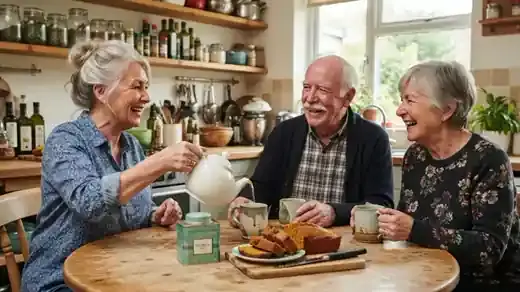
In November I made a pot for three friends from the church supper I'd been skipping, and wrote down what they said.
That last line is the one I underlined.
Three people who'd known me for twenty years noticed I'd gone missing before they noticed the tea.
The panel is three people, at one table, on one afternoon. It's not a review and it's not a study, and the names are shortened;
it's a cook writing down what her guests said about a pot she made.
If you want more opinions than mine, there's an easy way to get them: call the company line and ask what people say about this blend.
A company that prints its phone number on the page is a company that expects you to call.
Twelve Weeks of Three O'Clock Cups, Good Weeks and Bad
I started on Monday, October 20 of last year, the first week the market closed for the season.
I'd like to say I started out of hope, but I started out of stubbornness, because Pilar was going to ask.
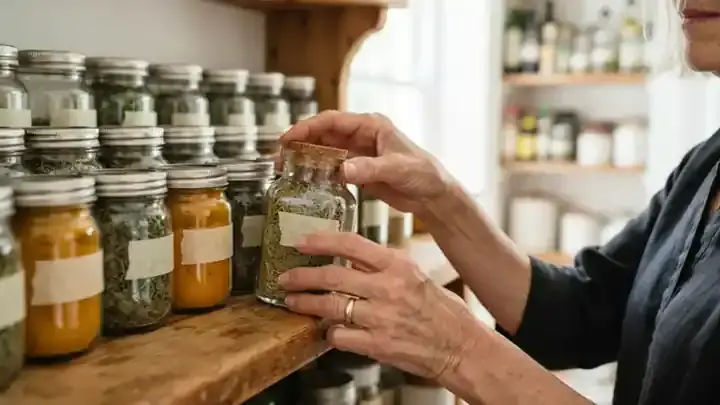
And I added one thing to the routine that had nothing to do with the tin. I started a pantry inventory.
Every afternoon, while the timer ran, I named the jars on my two pantry shelves out loud, left to right, without looking.
Name of the herb, what I use it for, and one dish I made with it at school.
There are thirty-one jars on those shelves, counting the little one of saffron I'm saving for nobody knows what.
On the first Monday I got through twenty-two before I had to turn around and look.
The inventory was not a test, and I want to be plain about that.
It was a habit, the same as the kettle and the chair, and a habit you practice every afternoon gets easier for all kinds of reasons.
Bernie's whiteboard, October to January
- Week 1Cup at three o'clock five days of seven. Twenty-two of thirty-one jars named before I turned around. Empty trips: 9. Lenny said the kitchen "smells like a julep."
- Week 2Nothing. Same inventory, same misses, same minty cup. Empty trips: 10. Wrote "nothing" three days running and nearly gave the tin back to Pilar.
- Week 3First margin note: "didn't turn around until the cardamom." Went to the church supper and said Mae's sister's name first.
- Week 4Thanksgiving week: twenty-two people, no chair, no inventory, cup skipped four days. Empty trips: 12. Wrote "busy kitchen" and didn't scold myself.
- Week 6Named all thirty-one jars three afternoons in a row. Empty trips: 4. Shopped with the list in my coat pocket instead of on the counter.
- Week 9Christmas with Megan and the grandkids: cup in the morning instead of at three. Taught Theo the inventory with the spice rack.
- Week 12Annual checkup, with the whiteboard photographed on Lenny's phone.
I want to slow down on week two, because it's the week most people quit.
Three lines in a row that say "nothing," in the handwriting of a woman who already suspected she'd been talked into drinking a julep.
What kept me going was what kept me going through every flu season in that school kitchen. You don't judge a recipe by the first batch.
Week three is the margin note I'd circle: "Didn't turn around until the cardamom." The cardamom is the twenty-eighth jar on the shelf, near the end of the bottom row.
For most of the fall, I'd turned around by the fifteenth jar. In week three I made it to the twenty-eighth before I looked.
That's not a scientific measurement, and I won't let anybody quote it as one.
It's a marker line written by a woman who'd been practicing the same thirty-one jars every afternoon for three weeks, which is exactly how you'd expect an inventory to get easier.
Week four was Thanksgiving, and I'm printing it because a whiteboard that skips the bad week isn't an inventory. Twenty-two people in my house, two turkeys, no chair and no three o'clock.
I had twelve empty trips that week, the most of the whole twelve.
I wrote them all down in the same size marker as the good weeks, and on Monday I put the kettle back on.
Week six is the one Pilar asked to see.
Three afternoons in a row, all thirty-one jars, and four empty trips for the whole week, the lowest count since I'd started keeping track.
I also took the grocery list to the store in my coat pocket that week, and came home with everything on it.
Lenny didn't say anything, but he didn't take a photo of the counter either.
Week nine I spent at Megan's in Portland, with no whiteboard and no pantry of my own.
I drank the cup in the morning instead of at three, because Christmas in a house with children has no three o'clock.
My grandson Theo is eight, and he asked what I was doing when I named the spices in Megan's rack.
So I taught him the inventory, and he beat me on the second day, and I have never been prouder to lose.
Week twelve was my checkup, and I'll tell you about it in a minute.
I wiped it clean at the end of January and wrote one line in the corner before I did: "Oct 9, Jan 3: same kitchen, same cook, a lot of things changed."
That's the honest picture, ups and downs and Thanksgiving included.
It's one kitchen, one cook and a diary, not a study, and I can't tell you which of the changes moved the count.
What My Clinician Said About Twelve Weeks of the Whiteboard
In January I went to my annual checkup with a photo of the whiteboard on Lenny's phone and the tin in my purse. Megan made me promise to bring both.
My clinician is a careful woman who listens before she types.
I told her about the bay leaves, the list on the counter, Ray Delgado in the produce section, and then I put the tin on her desk.
She read the side, the way Wes Haskins had, and asked about my daily dose.
Then she asked the questions she asks, wrote some things down and said that from what she'd seen and heard that morning she had no particular concerns.
"Keep the chair at three o'clock," she said. "Keep going to that supper, keep walking to the market, and tell me if anything changes."
Then I showed her the photo of the whiteboard, and she looked at it for a long time, which in a twenty-minute appointment is a long time.
"You named thirty-one jars every afternoon," she said finally, "and you went back to the church supper. Those are the two lines I'd keep."
And here's the most honest sentence I can write about the tin: I can't tell you which line did what.
In twelve weeks I sat down every afternoon, practiced the same thirty-one names, went back to a room full of people, cut my coffee from four cups to two and drank a minty cup with no caffeine in it.
Any one of those could be the reason the afternoons felt clearer, or all of them together, or simply a good winter.
What I can tell you is the order: the tin didn't sit me down at three o'clock; the chair is what I sat down in.

What Readers Wrote When This Ran as a Short Column
A shorter version of this column ran in the spring. The comments were better than the column, which is usually how it goes.
The comments below are illustrative, retold from reader notes with names shortened. Replies sit indented under the comment they answer, and they're here because they ask what you're probably asking.
Carl's comment is the one I've thought about most. "Blamed her eyes."
I did the same thing with the church supper and my shoulder.
We invent a respectable reason, because the real one feels like a confession, and a confession at our age feels like a verdict.
And Bonnie's comment is the reason I'd print the coagulation paragraph again tomorrow, in bigger type.
Whatever you try, take the tin to your pharmacist first, and say the name of everything else you take out loud.
Pilar and I, Recorded for the Community Radio
In September, our little community radio station asked whether Pilar and I would sit for its "Kitchen Table Hour," a show where two neighbors talk over a pot of something.
Pilar said yes before I could say no.
We recorded it at my kitchen table, with a microphone between the teapot and the tin. Here's the transcript, trimmed only for the part where the kettle whistled through a whole answer.
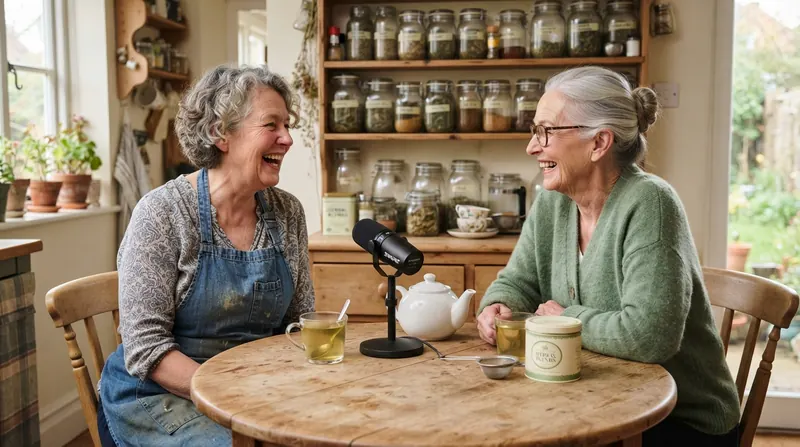
Kitchen Table Hour · Episode 31
A Head Cook, Her Second Cook and Thirty-One Jars
Bernie
host
Pilar, the station wants to know why my old second cook left a tin of tea under my whiteboard on a Monday morning.
 Pilar
guest
Because you'd stopped coming to the market, and you're the only person in this town who can tell rosemary from thyme across a parking lot. I wanted you back for purely selfish reasons.
Bernie
host
You could have just told me to come to the market.
Pilar
guest
For nineteen years you never once did anything because I told you to; you did it because the label said so. So I brought you a label.
Bernie
host
Tell them what you said when I showed you the research file, the ginkgo trial with three thousand people in it.
Pilar
guest
I said good, because I never told you it would change anything. I told you it was eight herbs you already knew, from people who answer the phone, and that you'd stopped sitting down.
Bernie
host
And the whiteboard? The empty trips?
Pilar
guest
The whiteboard is the best part: you counted something, so you started paying attention to it. Any cook knows that's how you straighten out a kitchen: you count what's going wrong before you change anything.
Bernie
host
What would you tell somebody who's standing in their own pantry right now, waiting for the reason they walked in?
Pilar
guest
Sit down and put the kettle on, count something, go back to wherever you stopped going. And if you take anything that thins your blood, show the tin to your pharmacist before the first cup.
Pilar listened to the recording afterward and asked for one correction.
She wanted it on the record that she can also tell rosemary from thyme across a parking lot, she just doesn't brag about it.
I've gone back to that last line of hers more than any other. "Go back to wherever you stopped going."
Retail tin, 1.9 oz · eight organic herbs · read the return terms before ordering
The Return Terms, Read Like a Supplier Contract
Now the part most columns skip, and the part I'd have read first on any supplier contract for the school district: what happens if you don't like it.
I want to be very plain here, because tea is one of those things where return terms get complicated.
This seller's return policy is generous in one way and strict in two others, so I'll give you all three.
The generous part: the policy says you can return products "for any reason," as long as you send them back postmarked within 30 days from the delivery date of your order.
The first strict part: "refunds will be issued only for the unused portion of the product returned."
In kitchen English, if you drink half the tin and send back the other half, you get back about half.
Items have to be in their original, undamaged packaging, and they have to be matched to your original invoice.
So keep the tin and keep the packing slip, the way you'd keep a receipt for a mixer.
The second strict part: you pay for the return shipping, and the original shipping isn't refunded, unless the mistake was theirs. The policy says plainly that they don't offer free return labels.
Qualifying refunds go back to your card or PayPal account. And there's one line I liked as a cook:
if anything arrives with insects in it within 30 days, the policy promises a full and immediate refund.
A mailing address, a phone number with a person behind it, and return terms with real words in them.
My checklist for any new supplier was three lines long, and this tin ticked all three before I'd tasted it.
Shipping, for the record: the seller ships only within the United States and Canada, and says domestic orders typically arrive two to ten days after they leave the warehouse.
Ten Letters That Came to the Kitchen
After the short column ran, I got more letters than I've had since my retirement party. I've answered the ten that asked what most of the others asked.
The letters below are illustrative composites, retold from reader notes with names shortened. The answers are mine, the same ones I'd give at my kitchen table.
Short answers to the questions I get at my kitchen table
How do you make it?
One tablespoon of the blend in a cloth tea bag or mesh basket, eight ounces of boiling water poured over it, steeped three to five minutes, per the seller's directions. I set the timer for four and drink it at three in the afternoon.
What does it taste like?
Minty first, then green and a little bitter, with warmth from the ginger at the end. The seller calls it "a minty aroma with a flavorful herbal kick"; honey softens it if you like.
Is there caffeine in it?
No. The tin prints "Caffeine Free" on the front panel, and the seller's page says the same.
How much of each herb is in it?
The seller doesn't publish the amounts. You get the list of eight herbs in order, but not the proportions, so nobody can compare a cup to the doses used in the studies.
What is "brahmi"?
The listing doesn't give the botanical name. The word is used for bacopa in some places and for gotu kola in others, two different plants; call the company and ask which one it is.
Will it bring the names back?
Honest people can't promise that. The tin calls it an herbal supplement, its claims haven't been evaluated by the FDA, the big ginkgo trial found no difference from a placebo, and this blend hasn't been studied on its own.
Can I drink it if I take something to thin my blood?
Ask first. The seller's page says anyone with a clotting condition should use it only under the supervision of a qualified healthcare practitioner, and the government page on ginkgo says it may raise the risk of bleeding with anticoagulants.
Is it organic?
Yes. Every herb on the list is labeled organic, the tin carries the USDA Organic seal, and it also has a kosher mark.
Who makes it, and how do I reach them?
Mountain Rose Herbs, PO Box 50220, Eugene, Oregon 97405. Customer service 800-879-3337, weekdays 8 to 4 Pacific; email support@mountainroseherbs.com; live chat seven days a week.
What if I don't like it?
Send it back postmarked within 30 days of delivery in the original packaging; you get a refund for the unused portion, and you pay the return shipping.
Who This Tin Is For, and Who Should Pass
I wouldn't send a new recipe to the district office without a recommendation, so here's mine. Fair notice: half of it tells some of you not to buy.
It probably makes sense to look at it if:
- You want a small daily habit with a reason to sit down, and you already have a chair, a porch or a kitchen table in mind
- You like mint and herbal flavors, or you're happy to add a little honey
- You'd rather read eight familiar plants on one line than a list you need a dictionary for
- You don't take anything that thins your blood, or your pharmacist has already read the tin
- You'll keep a whiteboard, a list or a notebook and take it to your next checkup
It probably isn't for you if:
- You want a promise about names, keys or lists; the big ginkgo trial found no difference from placebo, and the tin makes no such claim
- You have a clotting condition or take a blood thinner and haven't asked your clinician yet
- You want to know the exact amount of each herb; the seller doesn't publish them
- You want to know which plant "brahmi" is before you buy; call the company first
- You're expecting or nursing, or you have a hormone-sensitive condition; red clover is on the list, so take the tin to your clinician before the first cup
That first line on the second list matters most.
This is a cup of eight herbs at three o'clock, not a plan; the plan is whatever you and your clinician write down together.
What the Tin Costs Against What I Already Spent
Now the money, because Pilar made me promise I'd put it in black and white. The retail tin is $13.25 for 1.9 ounces of dried herbs.
The seller also sells the same blend in a one-pound bag for $23.50.
A pound is sixteen ounces, so the bag holds more than eight times as much as the tin for less than twice the price.
I can't tell you exactly how many cups that is, and I won't guess, because the seller doesn't print a number.
A tablespoon of leafy herbs weighs very little, and the tin is not small, but I'd rather you count your own cups than trust my arithmetic.
I'm not saying the $85 was wasted because the tin is cheaper.
I'm saying the $85 was aimed at my kitchen table, and the tin comes with a reason to sit down at it.
If the blend suits you, the one-pound bag brings the cost per ounce way down. If it doesn't, the tin is the cheapest way to find out, and I'd start there.
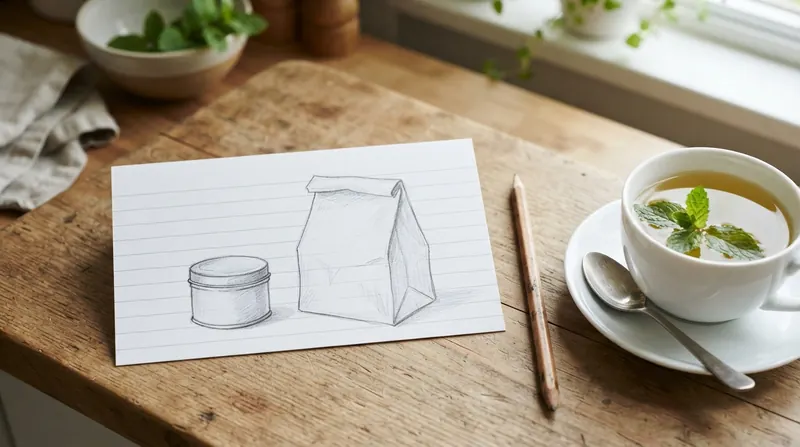
What I Liked About the Tin, and What I Didn't
Every supplier I ever worked with got a report card at the end of the year. Here's the one for this tin, good and bad, in the same size handwriting.
✓ Eight organic herbs on one line, all of them plants I know from a kitchen garden. Nothing for color, nothing for sweetness, nothing I needed a dictionary for.
✓ Caffeine free, printed on the front.
For a woman who'd crept up to four cups of coffee by noon, a hot cup at three o'clock with nothing to wind me up was a real change.
✓ The rosemary study.
It's one small trial, but it's the only study in my file that used an amount a cook would recognize, and it reminded me that more isn't better. [6]
✓ A phone number, an email, a live chat and a mailing address, all on the company's own page. A company you can call is a company that expects you to.
✗ No amounts. The seller lists the eight herbs but not the proportions, so nobody can compare a cup to the doses in any study.
✗ "Brahmi" without a botanical name. Two different plants go by that word, and the listing doesn't say which one is in the tin.
✗ No reviews of this blend on the seller's page, only the company-wide score, which isn't about this tea.
✗ The clotting line and the ginkgo leaf.
If your blood doesn't clot the way it should, or you take anything to thin it, this isn't a tin to open without your clinician. [1]
✗ Returns cover only the unused portion, and you pay to ship it back. That's fair for food, but you should know it before you order.
If You're Standing in Your Own Pantry, Waiting for the Reason
I can't tell you what to do.
I can tell you what I'd do if I were reading this column instead of writing it, back last September with the ginger jar in my hand.
First, before you buy anything at all: pick something you can inventory every day and start naming it out loud.
The jars on your shelf, the birds at your feeder, the hymns, the neighbors on your street.
Second: go back to wherever you stopped going. The supper, the market, the club, the pew, whatever it was you quietly dropped because of the names.
Third: tell your clinician what you've noticed at your next checkup, and bring the list. That's the step mine cared about most, and it costs nothing.
And fourth, if you'd like something in the cup and your pharmacist has read the tin: look at the label I've been describing for ten thousand words.
Eight organic herbs, one tablespoon, eight ounces, three to five minutes.
I won't pretend a link at the bottom of a kitchen column is anything but a door to the seller's shop. Tea Zest Journal doesn't keep inventory; we keep whiteboards.
But if you walk through that door, you'll know exactly what's on the other side: eight herbs, a minty cup, a return policy you've now read, and an Oregon phone line.
Eight organic herbs, caffeine free · start with the 1.9 oz tin if you're unsure
One more thing, and then I'll let you get to your own afternoon. The whiteboard is still on my refrigerator, and the market opened again in May.
Yesterday's line reads: "Oct 25. Kettle 3:00, one cup.
Thirty-one of thirty-one, and Ray Delgado at the market, first name, before he said mine.
Pilar's mint is done for the year. Supper Sunday, my turn to bring the pumpkin bread."
Thirty-one of thirty-one. Four words, in green marker, written by a woman who once stood a full minute in her own pantry door holding a jar of ginger.
P.S. Pilar's strip of masking tape is stuck inside my cupboard door now, curled at the corners and faded to the color of weak tea; if you have a Pilar in your life, thank her, and if you are the Pilar, bring the tin anyway.
P.P.S. Remember the order on Pilar's note, the chair, the supper, the checkups: the tin is the smallest of the four, and it's the only one that comes in the mail.
The full ingredient guide, with a note on each of the eight herbs, the coagulation caution and on reading the advertising around this tin, is linked at the foot of this page.
First, the people: Bernie Vasko is a pen name. Pilar, Lenny, Megan, Ray Delgado and the school kitchen are composites, the way small-town columns have always been written.
Everything about the tin itself, its label, its price, its brewing directions, its caution and its return terms, comes from the seller's own pages, read in October 2026.